The boxed beef cutout has increased faster than seasonally normal and suggests that beef demand remains strong in the face of tightening beef supplies.
Derrell S. Peel, Oklahoma State University
Wholesale beef prices have moved higher thus far in 2026, reflecting both strong beef demand and typical seasonal patterns. Choice boxed beef prices averaged $386.41/cwt. the first week of March, up 9.1 percent from the beginning of the year, and up 23.0 percent year over year.
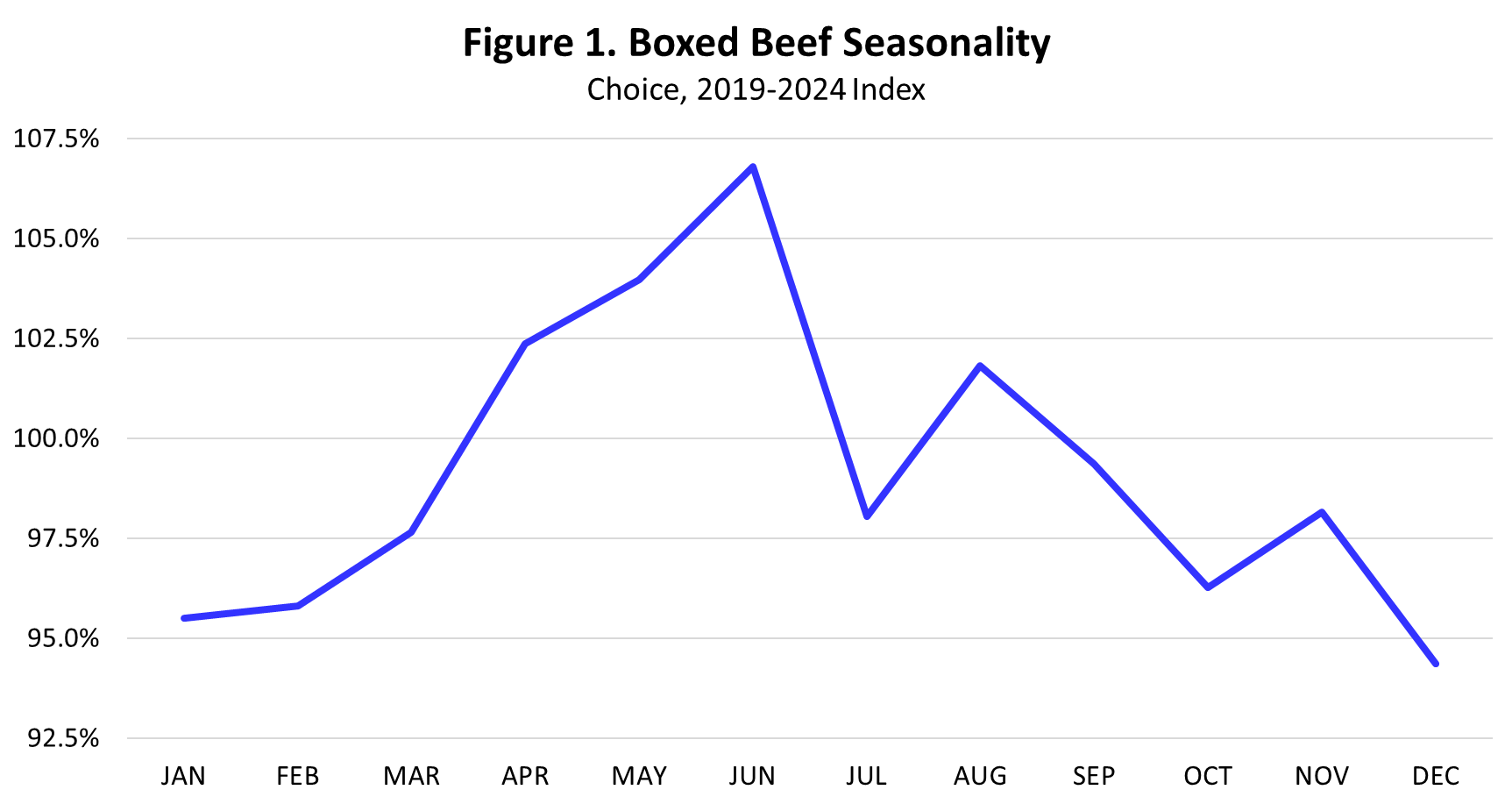
Boxed beef prices normally increase through the first half of the year, peaking in June before declining to the end of the year (Figure 1 above). Boxed beef prices usually begin to increase more sharply in April as retailers build inventories for the coming summer demand that begins in late May. The average seasonal price index indicates that boxed beef prices typically increase by over eleven percent in the first half of the year. This year, boxed beef prices have already increased over nine percent, earlier than usual. It is not clear if boxed beef prices will increase more than seasonally this year or simply move to seasonal peaks sooner than usual. Both are possible.
The boxed beef seasonal price pattern in Figure 1 is the net effect of many beef products included in the composite boxed beef measure. Across many beef products from the various carcass primals, different beef products have varied and unique seasonal price patterns reflecting different seasonal demands. While many beef product prices are increasing in the first half of the year, some products have lower prices early in the year and higher prices later in the year.

Figure 2 shows the seasonal price pattern for three middle meat cuts. High-valued middle meats drive much of the seasonal increase in cutout values. Strip loins lead the seasonal increase with the most variable seasonal pattern of any wholesale beef product, increasing an average of thirty percent from January to May. Strips are a popular summer grilling item as well as for restaurant menus. Ribeye prices also increase modestly in the first half of the year due to seasonal retail along with food service demand. Tenderloins are more popular for food service menus and the seasonal bump in the second quarter may be largely due to Mother’s Day demand. Prices of these steak items drop in the heat of summer with Ribeye and Tenderloin demand rebounding to seasonal peaks in the fourth quarter due to restaurant and holiday demand.
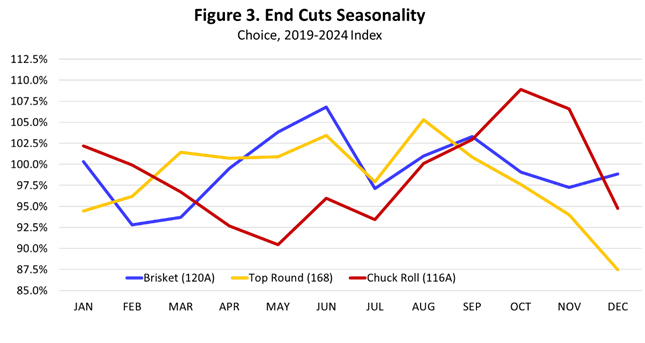
Figure 3 shows the seasonal price patterns for some end cuts and briskets. Brisket prices typically increase and peak in the second quarter with stronger summer demand. Round values have been very strong the last two years as a result of declining non-fed beef production and demand for additional lean. Round prices are typically strong from the second quarter through the third quarter as a result of seasonal ground beef demand. Prices for chuck rolls usually decrease into warmer weather. Chuck products have higher demand for roasts and crock pot cooking in cooler weather with prices reaching a seasonal peak in the fall. Chucks are also popular export items.
All wholesale beef cuts are higher year over year with most following seasonal patterns thus far in the year. The boxed beef cutout has increased faster than seasonally normal and suggests that beef demand remains strong in the face of tightening beef supplies.