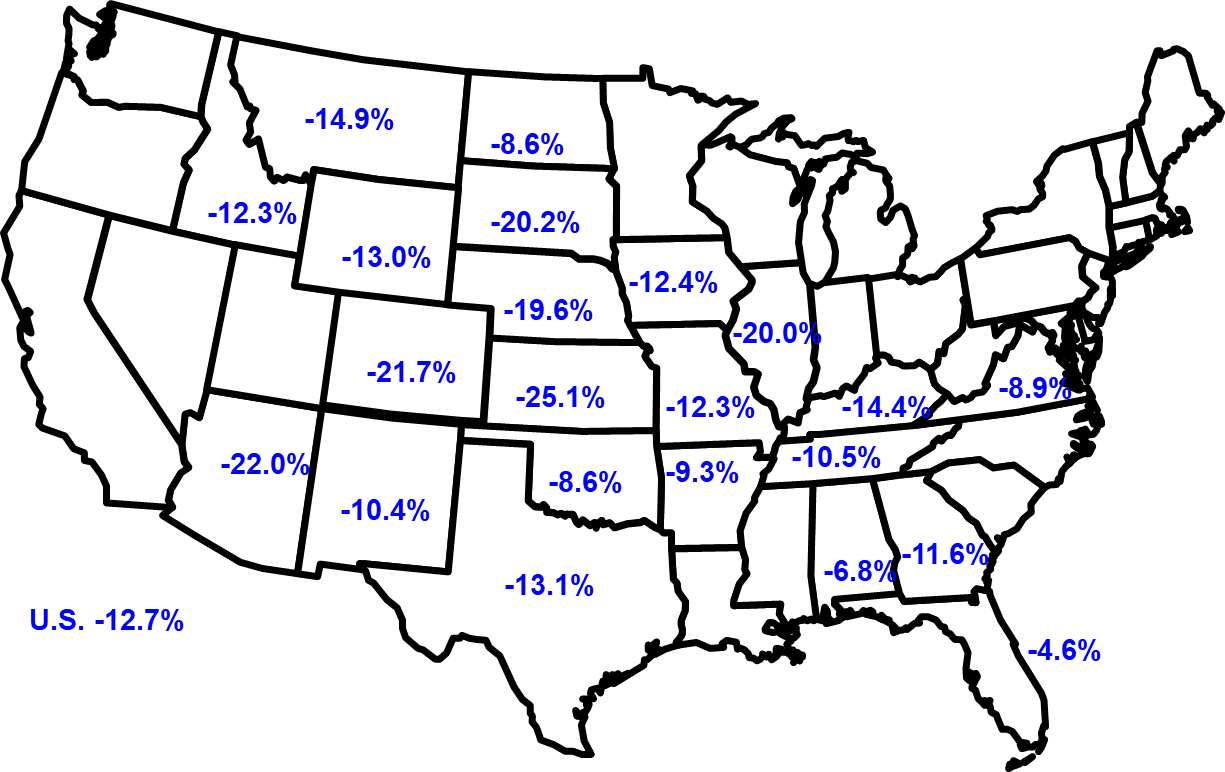
Figure 1. Beef Cow Herd % Change from 2019, Selected States
Derrell S. Peel, Oklahoma State University
The January 1, 2026 beef cow inventory was 27.607 million head, down 1.0 percent from one year ago. The beef cow herd has decreased a total of 4.033 million head since the cyclical peak in 2019, a decrease of 12.7 percent. The beef cow herd may be at a cyclical low in 2026, though it is uncertain and likely depends on weather conditions in coming weeks. A slight increase in beef replacement heifers in the latest data raises hopes that some momentum for heifer retention is building that would lead to eventual herd rebuilding. This raises questions about where the most herd liquidation has occurred and where herd rebuilding might be most likely.
A proportionally larger share of herd liquidation has occurred in the heart of beef cow production regions (Figure 1). In 2019, 13 states in the middle of the country accounted for 64.6 percent of the total herd but by 2026, the share had dropped to 63.1 percent. The herd inventory change in these 13 states in the past seven years totaled 3.0 million head, 74.3 percent of the total herd decrease.
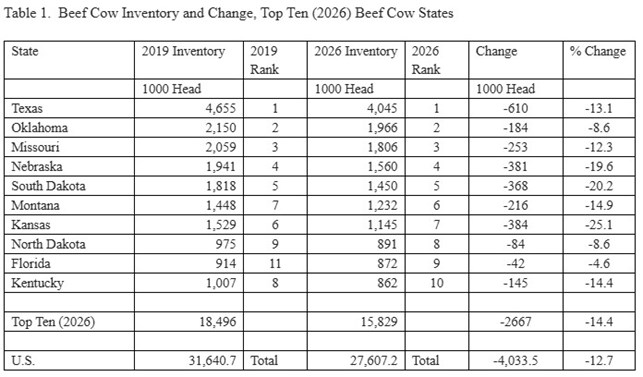
Table 1 shows more detail for the current top ten beef cow states. The top five states remained in the same rank order though all have significantly lower beef cow inventories in 2026. Among the top five states, Texas decreased the most in absolute terms, but South Dakota lost the largest percentage, followed closely by Nebraska. Oklahoma decreased the smallest amount, in part due to a small increase in the beef cow inventory from 2025 to 2026. Kansas experienced the largest percentage decrease among major beef cow states and dropped from number 6 to 7 in the top ten rankings. Montana, though down 14.9 percent, moved ahead of Kansas into the number 6 place. The North Dakota beef cow inventory is currently down 8.6 percent from 2019 and puts the state up one place from number 9 to 8. North Dakota, along with Oklahoma and Florida, was one of three top ten states that showed an increase in the beef cow inventory from 2025 to 2026. Florida, with just a 4.6 percent decrease in the beef cow herd, moved into ninth place, while Kentucky dropped from eighth to tenth place. Arkansas was number 10 in 2019 and dropped to eleventh in 2026.
There is little doubt that drought from 2021-2025 prompted much of the beef cow herd liquidation in major beef cow states. Continuing drought conditions and drought threats are likely to keep cattle producers cautious and hesitant to aggressively restock in much of the region and in other areas.
Changes in crop production and land use are also a factor in some areas. From 2019 to 2025, corn and soybean planted acreage in the U.S. increased by 8.6 percent, an increase of 14.2 million acres. In South Dakota, planted crop acreage increased by 3.38 million acres, up 24.5 percent from 2019 to 2026, with corn and soybean acreage up by 52.2 percent. Simultaneously, hay acreage in the state decreased by 710 thousand acres. It appears increased crop production is likely to limit herd rebuilding in South Dakota. Increased crop production may limit herd rebuilding in the Midwest and eastern regions of Great Plains states including Kansas, Nebraska and North Dakota, along with South Dakota. Ongoing weather conditions and longer-term structural adjustments in agriculture suggest that beef cow herd rebuilding will continue to be a slow process.
Dr. Derrell Peel, Oklahoma State University Extension Livestock Marketing Specialist, breaks down the major drivers behind this year’s market volatility — and shares what producers can expect heading into 2026 on SunUpTV from February 26, 2026 at https://www.youtube.com/watch?v=TghICOSatww